

Why Does Korea Stop for the Suneung?

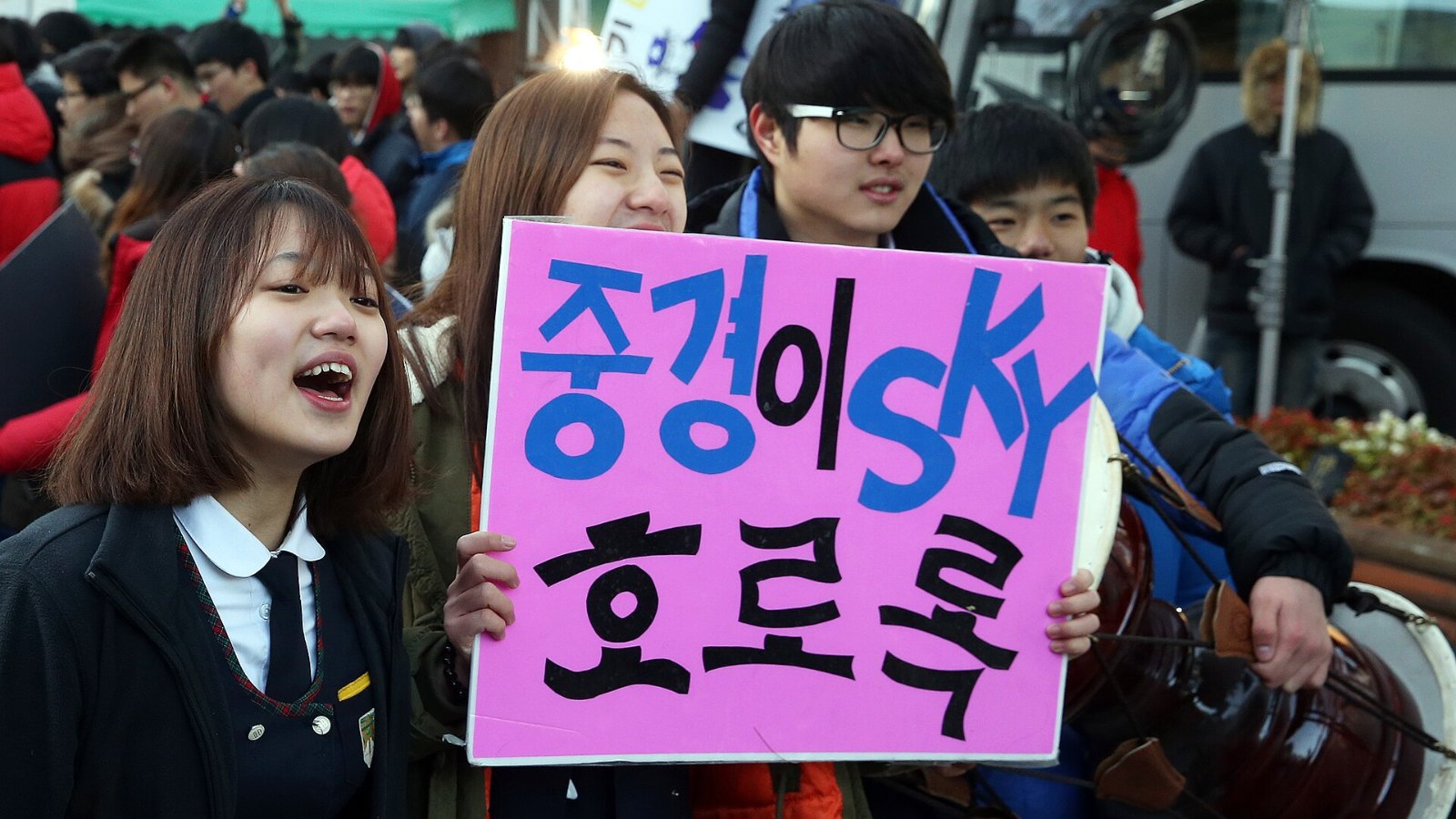
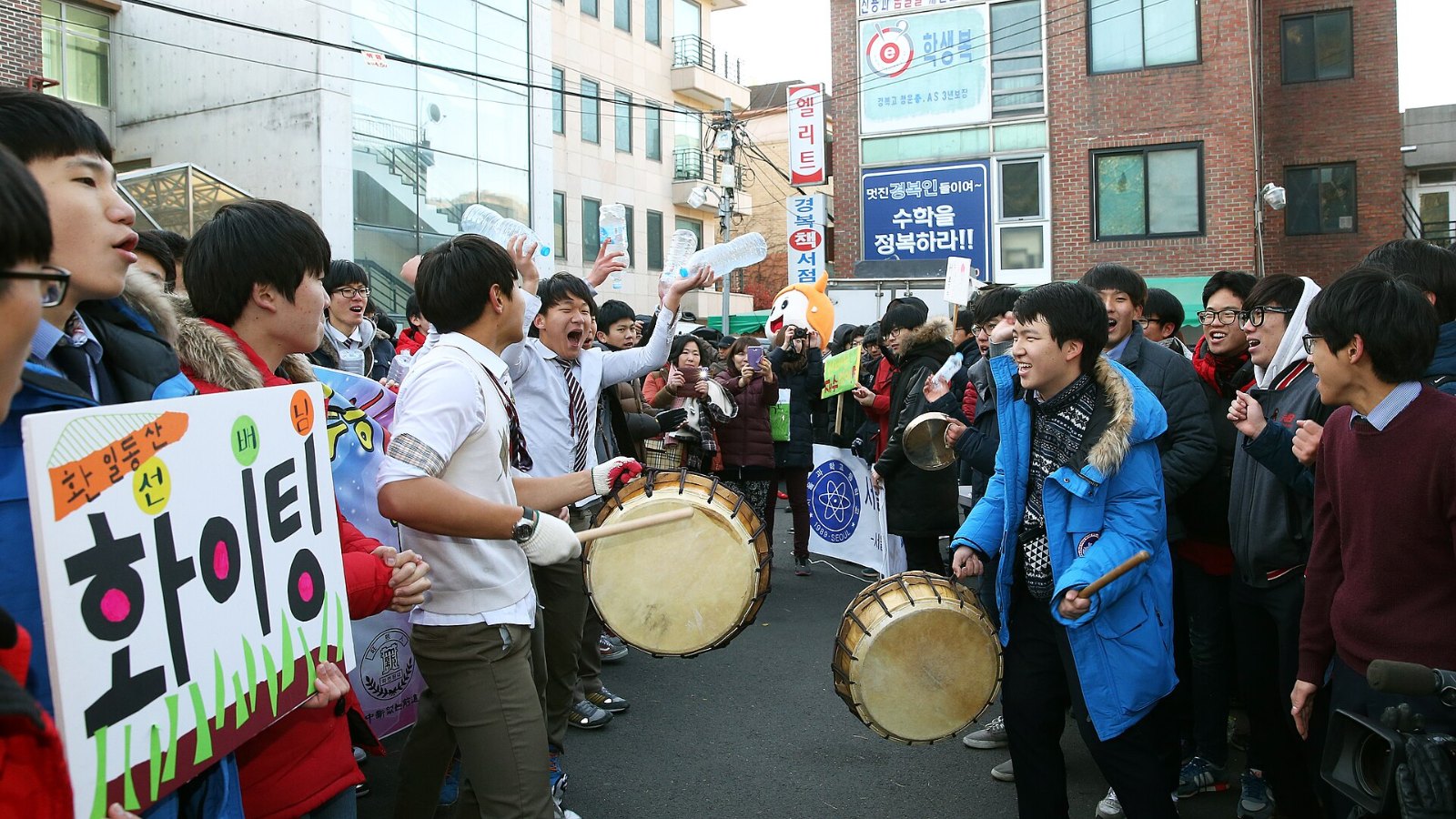
Every year in mid-November, one Thursday morning in Korea looks a little different. Offices and government agencies start an hour late, and the subway runs more often. Police clear the way to test sites, and sometimes give a late student a ride in a patrol car. Younger students stand at school gates from before dawn, shouting “Suneung hwaiting!”
A little after 1 p.m., even the sky goes quiet. For about half an hour, while the English listening test is on, planes across the country neither take off nor land. This is Suneung day, the day of the College Scholastic Ability Test. This year, it falls on November 19.
What is the Suneung?
The Suneung is the national exam that students take, all on the same day and at the same hour, to get into university. Korean, math, English, Korean history, and electives in social studies or science are all crammed into one day, from 8:40 a.m. to 5:45 p.m. Last year, 554,174 students sat the exam at 1,310 test sites across the country.
It wasn’t Korea’s first national college entrance exam. According to the Encyclopedia of Korean Culture, it began with the Preliminary College Entrance Exam, first used for the 1969 school year. Passing it earned you the right to sit each university’s own entrance exam. After university-run exams were abolished in 1980, a renamed national test, the Scholastic Achievement Examination, took center stage from the 1982 school year.
That test was criticized for measuring little more than multiple-choice memorization. So in 1993, the College Scholastic Ability Test was introduced to measure thinking skills. In its first year it was given twice, in August and November; since then it has been held once a year, every November. The names and formats have changed, but for more than 50 years the basic idea has stayed the same: a single national exam that decides who gets through the university gate.
The Suneung isn’t the only way in. Students can also be admitted on their high school grades and activities. Still, it remains the biggest gateway in Korean admissions, and for most Koreans, the biggest exam they take before becoming adults.
The day the country stops
What the government does on Suneung day surprises many foreigners. Here’s what it did last year:
- It asked government offices and companies to start work at 10 a.m. or later.
- It added subway trains in the Seoul area between 6:00 and 8:10 a.m., when students head to their test sites, and stationed police and other emergency vehicles along their routes.
- It closed test site streets to cars from 200 meters out.
- During the English listening test, it rescheduled plane and helicopter takeoffs and landings, and even paused military training such as artillery fire.
The year before was the same. For 35 minutes during the listening test, the Ministry of Land, Infrastructure and Transport banned all takeoffs and landings nationwide, except for emergencies. Planes already in the air had to hold above 3 km, and 156 flights were rescheduled.
For one day, an entire country steps aside for its test takers.
Why go this far?
The Suneung happens on one single day. Miss it, and you wait a whole year to try again. Three years of high school, and often more, come down to that one day. Korean adults simply won’t let it be ruined by oversleeping, a traffic jam, or the roar of a jet.
The roots go deep. Korea has chosen people by examination for more than a thousand years. According to the Encyclopedia of Korean Culture, the civil service exam, gwageo, was first held in 958 under King Gwangjong of Goryeo and remained the main way to select officials for about a thousand years, until it was abolished in the Gabo Reform of 1894. Unlike appointments based on family lineage, gwageo judged ability. The same encyclopedia notes that before modern times, only China, Korea, and Vietnam chose officials by exam.
The belief that passing an exam can change your life has lasted that long. After the Korean War, in a poor country, education was the surest ladder up. The encyclopedia describes the 1960s this way: “the sons and daughters of farming and fishing villages sold their fields to pay tuition.” The college entrance exam was the first gate a child from a poor family could pass on ability alone. Koreans have a saying for it: a dragon rises from a small stream.
That passion for education hasn’t cooled. According to a survey by the Ministry of Education and the National Data Office, Korean families spent 27.5 trillion won on private tutoring and cram schools for elementary, middle, and high school students in 2025. Three out of four students (75.7%) took part, spending an average of 604,000 won a month, the highest on record.
The money gap is stark, too. In the same survey, households earning 8 million won or more a month spent 662,000 won per student each month, while those earning under 3 million won spent 192,000 won. With this much riding on one exam, Suneung day isn’t just the test taker’s day. Families, schools, and the whole country sit it together.
Taffy, sticky rice cakes, and no seaweed soup
As the Suneung approaches, students’ desks fill up with yeot (Korean taffy) and chapssaltteok (sticky rice cakes). The idea is that you’ll “stick” to the exam the way they stick to your teeth. In Korean, to stick to an exam means to pass it.
The link between exams and taffy goes back a long way. The Annals of King Yeongjo record that in 1773 a civil service exam site was so disorderly that “rice cakes, taffy, liquor, and tobacco were sold openly on the grounds.” It was an official’s complaint, but it also shows that 250 years ago, there were rice cakes and taffy outside the exam hall.
There’s also a food to avoid: seaweed soup. Seaweed is slippery, and to “slip” on an exam means to fail it. In a country where people eat seaweed soup on every birthday, a student whose birthday falls near the Suneung might skip it that year.
And on the morning of the exam, outside the gate, younger students shout: “Suneung hwaiting!” (If you’re wondering why Koreans cheer with a word that means fighting, I wrote about it in Why Do Koreans Say “Fighting”?)
What I think, as a Korean
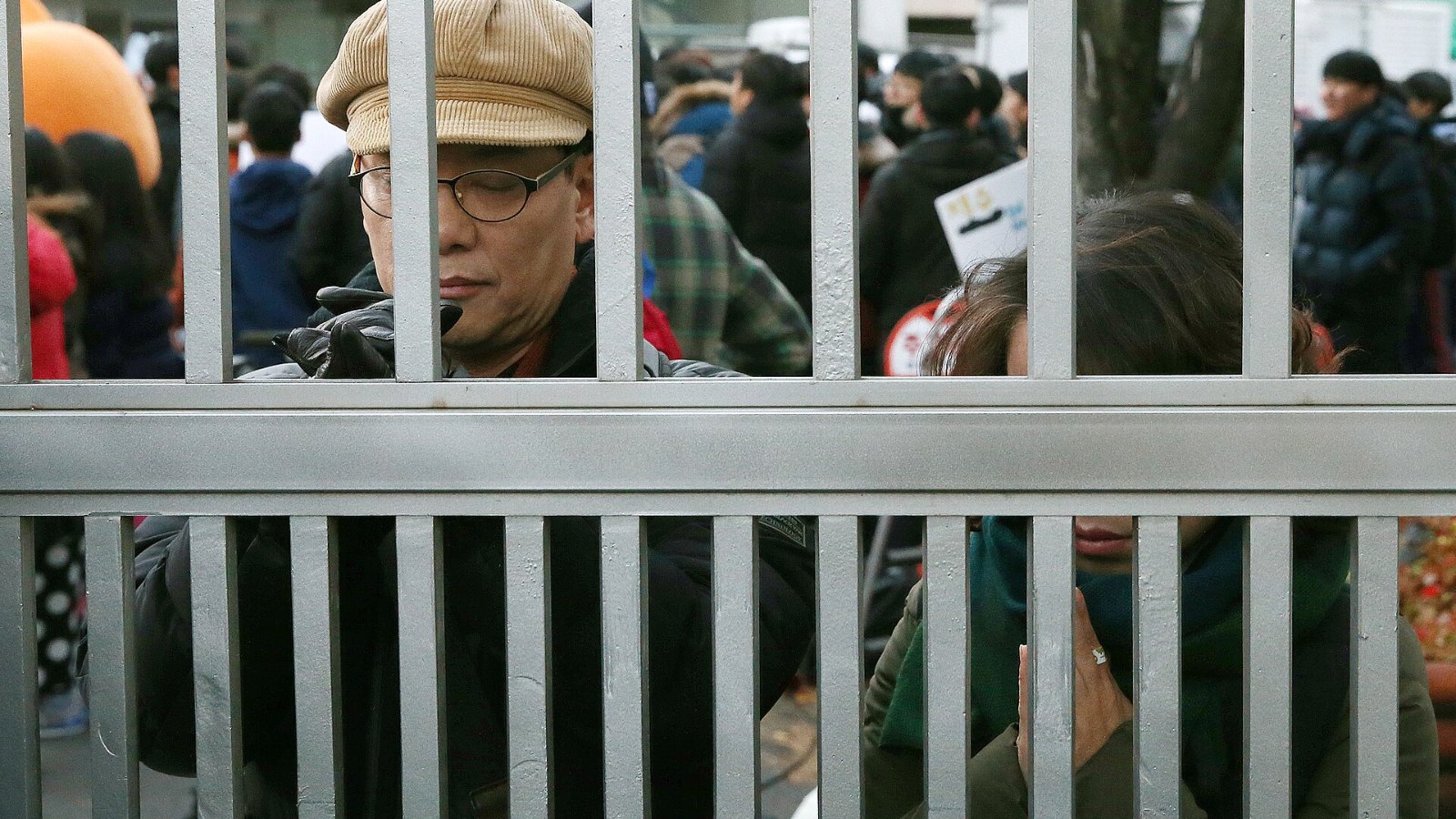
When I was young, the college entrance exam was the first gate through which a dragon could rise from a small stream. Even if your family was poor, even if you grew up in the countryside, doing well on the exam could open the way. I think the sight of a whole country pausing to protect its test takers carries that respect for a one-time chance.
Things are different now. People say, almost as accepted fact, that good grades take money. The exam is still a single day, but the starting line for preparing for it already differs from one household to the next.
I worry about a culture that puts grades above everything. It’s sad when one Suneung score sets the value of an eighteen-year-old and becomes the line that sorts people. Let’s keep the kindness of a country that steps aside for its test takers. But let’s also tell them that this exam is not the whole of their lives.
If you’re in Korea on Suneung day
- If you’re flying, double-check your departure time. Takeoffs and landings stop nationwide during the English listening test, and many flights are rescheduled.
- The morning rush hour comes later than usual. Many offices, government agencies, and banks open at 10 a.m.
- Near test sites, don’t honk or make loud noise. Cars are also kept away from the school gates.
- If a Korean friend has a family member taking the exam, a gift of taffy or sticky rice cakes and a simple “Suneung hwaiting!” is perfect. Save the seaweed soup for after the test.